There’s a particular challenge that comes with working at height in a premium hotel environment. The solution has to work, every single time, for years to come, and it can’t look like an afterthought bolted onto a building that guests pay quite a large amount to stay in. When fire damage compromised the rope access platform on Level 34 of the Hilton Surfers Paradise, the building’s management needed more than a quick fix. Instead, they required a properly engineered, permanent solution and that’s where RISSafety came in.
The Challenge
The Hilton Surfers Paradise sits at 34 levels above the Gold Coast skyline, a high-profile, property with high occupancy, where there’s constant work happening run around the clock. Fire damage to the rope access platform trolley on the upper level had effectively halted all façade and external maintenance work that relied on that system. Without a functional platform, routine building services couldn’t be safely carried out. The abseil anchor points attached to the façade had also sustained damage and needed replacement.
Relying on temporary access measures, scaffolding, hired-in boom lifts, or ad hoc rigging, wasn’t a viable long-term answer for a property of this type. Between the cost, the impact on guests, the complexity of working in a live hotel, and the ongoing safety risks, it became pretty clear that a permanent, purpose-built access system was the only option that actually made sense.
The project brief was clear. Replace the damaged trolley and pulley system with an exact-match engineered solution. Reinstate the abseil anchors. Do it without shutting down the hotel and make sure what goes back up there is better than what came down.
The RISSafety Approach: Engineered from the Ground Up (to the Roof)
RISSafety didn’t just turn up and start installing roof safety systems. The first step was a proper site walk-through, taking the time to really understand how the building worked day-to-day, what had failed, and what the team on-site actually needed moving forward.
On a building like this, with multiple levels and existing structures already in place, you can’t take shortcuts. The team looked closely at what was there, what had been damaged, and how access needed to work long-term. That thinking shaped everything that came next, so the end result wasn’t just compliant, but genuinely practical to use.
The original trolley system was a good starting point, but it wasn’t something that could just be replicated and reinstalled. It was pulled apart, assessed properly, and then rebuilt with a smarter approach. The focus was on keeping what worked, fixing what didn’t, and upgrading the whole system using better materials and more considered design.
One of the biggest constraints was access. Everything had to go up through a standard stairwell, which meant the new trolley couldn’t be built as one bulky piece. Instead, it was designed and manufactured in sections so it could actually get to the roof without turning into a logistical nightmare.
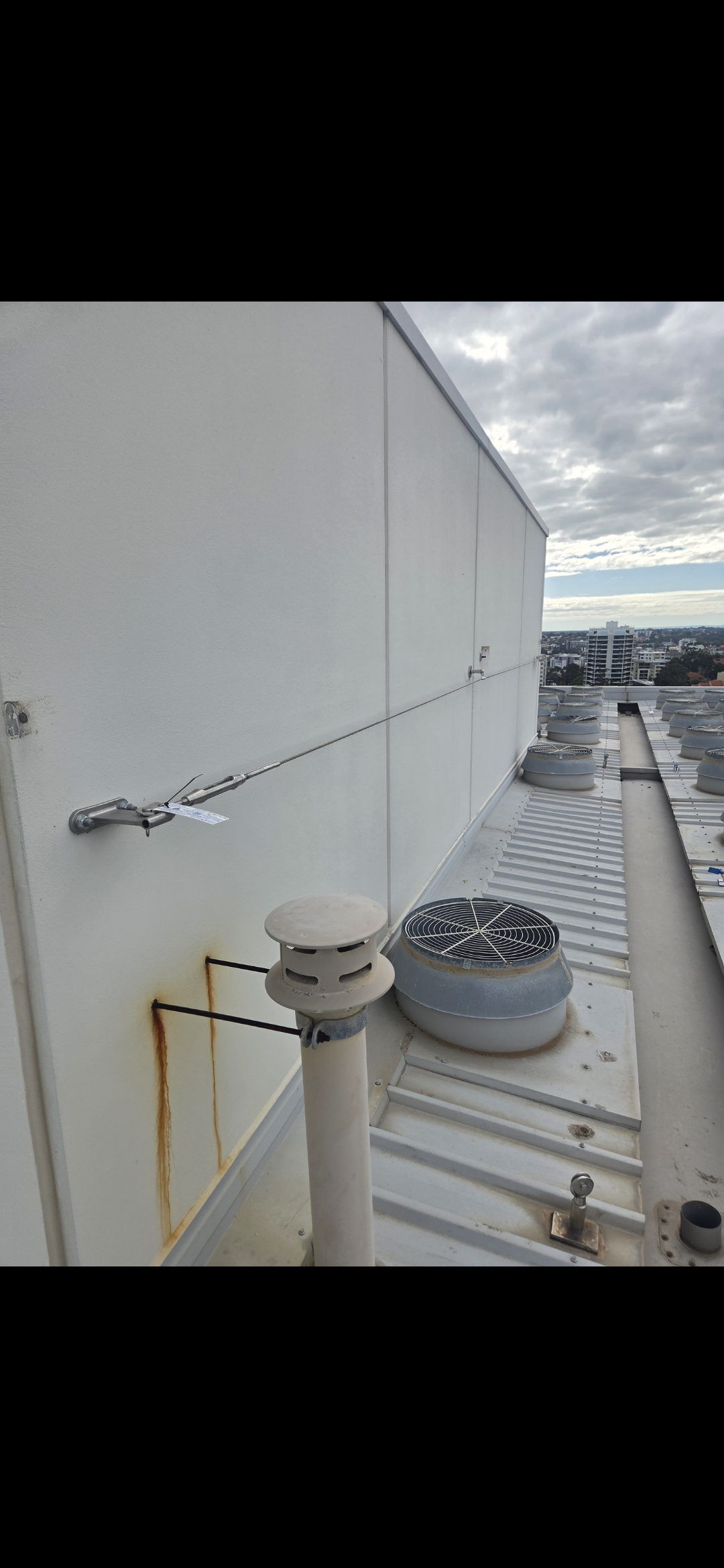
Alongside that, a new 30-metre manual lateral pulley system was installed. This restored the building’s ability to safely move workers and equipment across the façade, which is critical for ongoing maintenance.
The team also replaced four damaged abseil anchors. Each one was fitted with a new anchor point, designed to integrate properly with the existing structure while meeting current compliance requirements.
Throughout the whole process, RISSafety worked closely with the hotel’s facilities and project teams to make sure everything was staged properly. No unnecessary disruption, no impact on guests, and no surprises along the way.
Because in a live commercial environment like this, it’s not just about getting the engineering right. It’s about delivering the work in a way that actually works for the people using the building every day.
Why Permanent Access Platforms Matter: Beyond the One-Off Fix
It’s worth stepping back for a moment to explain why this type of solution matters beyond just fixing what was broken. Buildings of this scale have ongoing, recurring maintenance needs, façade cleaning, glazing inspection, mechanical and HVAC servicing, antenna maintenance, and more. Without a permanent, code-compliant access system in place, every single one of those jobs requires a separate temporary access setup.
That brings ongoing cost, longer lead time, added risk, and the constant hassle of managing contractors working from improvised setups instead of a properly engineered platform.
Permanent access platforms change that completely. Once installed, they become part of the building’s infrastructure, ready when needed, easy to inspect, fully compliant, and designed specifically for the work carried out in that space.
For property managers and facilities teams, it shifts things from reacting to maintenance issues to having a system in place that makes maintenance straightforward from the start.
There’s also an important workforce protection aspect. Height safety equipment inspections are a required part of any compliant access setup, and a permanent system with fixed anchor points, engineered load ratings, and proper documentation makes those inspections far more consistent and reliable. It’s a much cleaner process compared to trying to audit temporary setups that change with every job.
Having qualified height safety equipment inspectors assess a permanent, purpose-built system gives building owners far greater clarity and confidence in their overall safety position.
The Result: A Better System Than What Was There Before
The outcome at Hilton Surfers Paradise exceeded what had originally been in place. The quality of the new trolley build surpassed the original, not in a vague “we think it’s better” sense, but in a measurable, practical way. Movement along the rails was smoother and more controlled, which makes a real difference to the people who actually have to work from it at height, day in, day out.
The manufacturing approach also made installation faster than anticipated. Precision fabrication off-site means components arrive ready to fit, with less time spent problem-solving on the roof and more time spent actually completing the installation. That kind of efficiency matters when you’re working in a live hotel environment where time on site needs to be managed carefully.
With the platform reinstated, the remaining external maintenance program which had been on hold pending resolution of the access situation, could proceed via rope access as planned. The building’s facilities team now has a reliable, permanent system in place that will support the property for years to come, backed by a full set of installation and compliance documentation for future height safety inspections.
What This Project Demonstrates About RISSafety’s Capabilities
Projects like this bring together several key areas of expertise, from structural engineering and fabrication through to rope access system design, compliance, and the practical realities of working within an occupied, public-facing building.
It’s not enough to be good at one of those things, you need to be across all of them simultaneously.
As a roof safety specialist, RISSafety brings that whole-of-project capability to every engagement.
The team doesn’t just design systems, it understands how they’ll actually be used day to day, what ongoing inspection and maintenance requirements look like, and how to deliver the installation with minimal disruption to the client’s business. That approach leads to fewer surprises, faster delivery, and a system that performs as intended.
For commercial property owners and managers in Queensland and beyond, the Hilton Surfers Paradise project is a strong reference point. Whether it’s a damaged system that needs replacing, a building that was never properly set up for maintenance access, or a new development requiring a permanent height safety solution from the outset, the process stays the same: detailed assessment, purpose-built design, compliant installation, and documentation that supports ongoing height safety inspections for the life of the system.
Considering a Permanent Access Platform for Your Building?
If your building relies on temporary access solutions for routine maintenance at height, or if your current system is due for review or replacement, it’s worth speaking with a qualified roof safety specialist before the next job comes up, not after.
RISSafety works across commercial, industrial, and hospitality environments to design and install permanent access platforms, conduct height safety inspections, and ensure that the people working on your building have a safe, compliant system under them every time they go up. Get in touch to discuss your site and find out what the right long-term solution looks like for your property.
Want to learn how our team could help yours with their height safety systems? Get in touch today.